Factors Affecting the Straightness of Cold Drawn Steel Wire
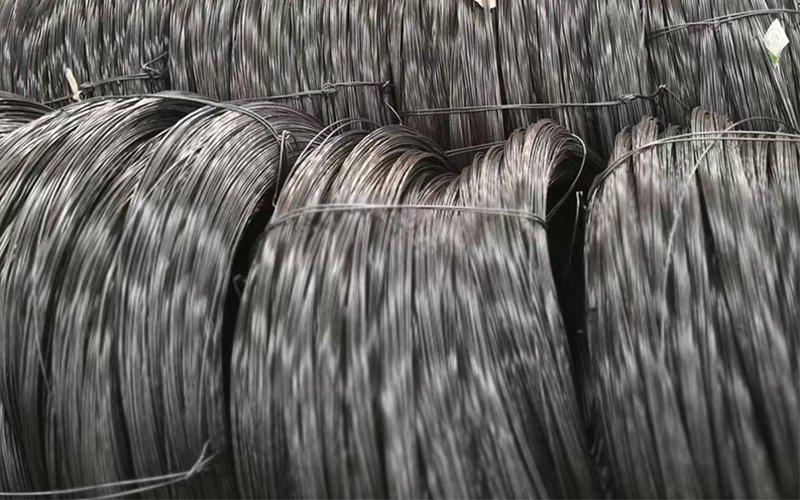
Straightness is an important quality characteristic of cold drawn steel wire. It describes how straight the wire remains along its length when free from external forces or restraints.
Poor straightness may cause wire bending, curvature, or an irregular payoff pattern. During automated spring coiling, these issues can lead to feeding deviations, wire jams, inconsistent spring dimensions, and lower production yields.
Wire straightness is influenced by several factors, including wire rod quality, drawing parameters, heat treatment, die condition, lubrication, take-up equipment, and handling practices.
1. Wire Rod Quality
The quality of the incoming wire rod provides the foundation for consistent straightness.
Original curvature, excessive ovality, nonuniform microstructure, segregation, and inclusions may contribute to uneven deformation and residual stress during drawing.
Existing curvature and internal stress can influence the straightness of the finished wire, even after multiple drawing passes. One-sided surface defects may also contribute to asymmetric deformation and increase the risk of bending.
How to improve it: Select wire rod with consistent dimensions, suitable metallurgical quality, and minimal initial curvature. Inspect incoming material for surface defects and dimensional variations before drawing.
2. Cold Drawing Parameters
Drawing conditions directly affect deformation uniformity and residual stress.
Reduction per Pass
An inappropriate reduction schedule, particularly excessive deformation in an individual pass, can contribute to uneven stress distribution and wire curvature. The reduction schedule should be matched to the steel grade, incoming diameter, target diameter, and drawing conditions.
Drawing Speed
Unstable drawing speed can cause fluctuations in drawing force, friction, and lubrication conditions. These variations may affect process stability and contribute to inconsistent wire quality.
Die Geometry and Alignment
Incorrect die angles, an off-center die opening, or poor die alignment can cause uneven deformation as the wire passes through the die. The resulting stress imbalance may cause the wire to bend after leaving the die.
How to improve it: Optimize the reduction schedule, maintain stable drawing conditions, and regularly inspect die geometry and alignment.
3. Heat Treatment and Residual Stress
Heat treatment is particularly important for high carbon steel wire when it forms part of the production process.
Uneven heating or cooling can create temperature gradients across the wire and contribute to nonuniform microstructure or residual stress. After cooling, stress redistribution may cause the wire to bend or warp.
Inappropriate tempering or other stress-control treatments, where applicable to the production route, may also affect dimensional stability and subsequent deformation.
However, the relationship between heat treatment and straightness depends on the specific wire grade and manufacturing process. Not all cold drawn steel wire follows the same heat treatment route.
How to improve it: Control heating temperature, temperature uniformity, holding time, and cooling conditions according to the required material properties and process specifications.
4. Equipment and Take-Up Conditions
The condition and alignment of production equipment can significantly affect wire straightness and coil shape.
Guide and Straightening Rollers
Worn, misaligned, or improperly adjusted guide rollers and straightening rollers can apply uneven lateral forces to the wire. Excessive or inconsistent roller contact may introduce additional curvature.
Take-Up Equipment and Spool Condition
An unstable traverse mechanism, a deformed spool, or excessive spool runout can cause uneven winding and inconsistent coil formation.
Take-Up Tension
Take-up tension must be controlled within an appropriate range. Excessive tension may cause unwanted elongation or affect the wire’s stress state, while insufficient or unstable tension may result in loose winding and poor coil formation.
These problems can make the wire more difficult to feed consistently during downstream processing.
How to improve it: Inspect roller alignment and wear, maintain the traverse mechanism, check spool condition, and establish stable take-up tension.
5. Phosphating and Drawing Lubrication
Surface preparation and lubrication help maintain stable friction conditions during cold drawing.
If the phosphate coating or soap-based lubricant is uneven, friction may vary around the wire circumference or along its length. This can contribute to uneven drawing forces and nonuniform deformation.
Poor lubrication may also increase die wear, surface scratching, and process instability.
How to improve it: Maintain consistent pickling, phosphating, and lubrication conditions where applicable. Monitor coating quality, lubricant condition, and cleanliness to support uniform wire drawing.
6. Handling, Storage, and Transportation
Finished wire can lose its original straightness or develop poor coil shape if it is handled or stored improperly.
Excessive stacking pressure, impact during transportation, or deformation of the wire coil may introduce permanent bending. Poor winding conditions can also create an irregular payoff pattern, even when the wire’s intrinsic straightness is acceptable.
How to improve it: Use suitable packaging and handling equipment, avoid excessive stacking pressure, and protect finished coils from impact and deformation during storage and transportation.
7. Practical Measures to Improve Wire Straightness
Manufacturers can improve straightness through coordinated control of the entire production process:
- Raw material: Select wire rod with consistent dimensions, surface quality, and metallurgical properties.
- Drawing process: Optimize reduction per pass and maintain stable drawing speed and force.
- Drawing dies: Control die geometry, alignment, wear, and surface condition.
- Heat treatment: Maintain uniform heating and controlled cooling where heat treatment is required.
- Lubrication: Ensure consistent surface preparation and lubrication.
- Equipment: Inspect guide rollers, straightening rollers, take-up systems, and spools.
- Finished product handling: Prevent deformation during winding, packaging, storage, and transportation.
- Quality inspection: Establish consistent straightness and coil-shape inspection methods based on customer requirements.
Conclusion
The straightness of cold drawn steel wire depends on the combined effects of raw material quality, drawing conditions, die alignment, residual stress, lubrication, take-up equipment, and handling.
The key is to maintain uniform deformation and balanced mechanical conditions throughout production while controlling residual stress and winding quality.
For manufacturers of high carbon spring steel wire and mattress spring wire, consistent straightness helps support stable wire feeding, efficient automated spring forming, and reliable downstream production.
WANLIN METAL supplies high carbon spring steel wire and low carbon cold drawn steel wire for industrial applications. Contact our team to discuss your wire diameter, mechanical properties, straightness requirements, and other product specifications.
Drawing die condition is another important factor affecting wire straightness and surface quality. Learn more about why drawing dies matter in cold drawn steel wire production.