High Carbon Steel vs. Low Carbon Steel
High carbon steel and low carbon steel differ in carbon content, mechanical properties, formability, weldability, and industrial applications. Understanding these differences helps manufacturers select the right material for specific products and production processes.
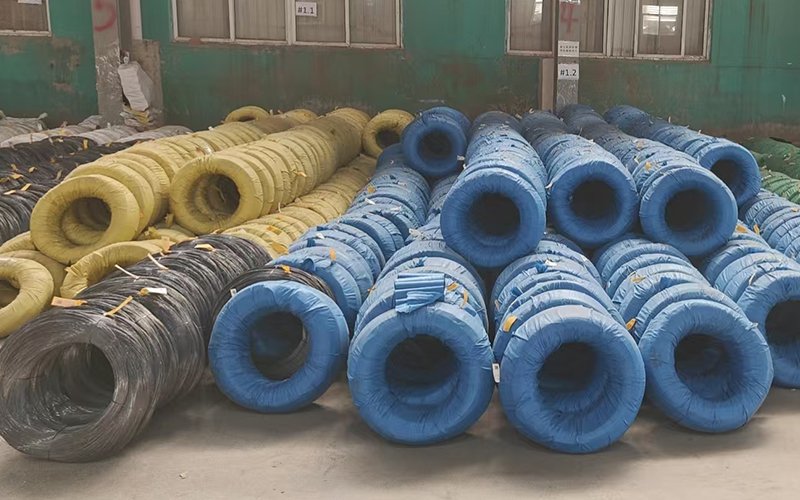
For steel wire applications, low carbon steel is commonly used where ductility and ease of forming are important, while high carbon steel is widely used for spring steel wire that requires high tensile strength and elastic performance.
1. Carbon Content
The main difference between high carbon steel and low carbon steel is their carbon content.
- Low carbon steel: Typically contains less than 0.25% carbon.
- High carbon steel: Commonly contains approximately 0.60%–1.00% carbon in many commercial classifications, although the exact range varies by standard and steel grade.
Higher carbon content generally increases the potential hardness and strength of steel after appropriate processing. However, the final properties also depend on alloy composition, heat treatment, and cold working.
2. Mechanical Properties
Low Carbon Steel
Low carbon steel generally has lower hardness and strength than high carbon steel, along with good ductility and formability.
Its relatively high plasticity makes it suitable for bending, stamping, drawing, and other forming operations. Many low carbon steel grades also offer good weldability.
These properties make low carbon steel wire suitable for products that require consistent forming performance and efficient downstream processing.
High Carbon Steel
High carbon steel can achieve high tensile strength and hardness through suitable heat treatment and cold drawing. It is widely used in applications requiring elastic recovery, wear resistance, and repeated loading performance.
When manufactured under appropriate conditions, high carbon spring steel wire can provide the mechanical properties required for mattress springs and other spring components.
However, higher carbon content generally reduces ductility and weldability compared with low carbon steel. Processing parameters and surface quality must therefore be carefully controlled.
3. Formability and Weldability
Low carbon steel is generally easier to bend, stamp, and form into complex shapes. Its good weldability also makes it suitable for many fabricated components.
High carbon steel is more sensitive to processing conditions. Its higher strength and lower ductility can make cold forming more demanding, while welding may require additional precautions to reduce the risk of cracking.
For wire manufacturers, selecting the correct grade and drawing process is essential to achieving stable production and the required finished dimensions.
4. Typical Applications
The two steel types serve different manufacturing needs.
Low Carbon Steel Wire Applications
Low carbon steel wire is commonly used for:
- Wire mesh and fencing
- Binding wire
- Nails, rivets, and fasteners
- Hangers and formed wire products
- Greenhouse clips and other agricultural components
- Components requiring bending and forming
Common low carbon steel grades used in wire production include Q195, Q235, SAE1006, SAE1008, and SAE1010, depending on the required specification and application.
High Carbon Steel Wire Applications
High carbon steel wire is commonly used for:
- Mattress pocket springs
- Bonnell spring systems
- Helical connecting wire
- Compression and tension springs
- Other components requiring high strength and elastic performance
Common steel grades used for high carbon wire production include 65#, 70#, 65Mn, 77B, and 82B, depending on the application and required mechanical properties.
The final wire properties depend on the steel grade, wire diameter, drawing reduction, heat treatment where applicable, and other manufacturing conditions.
5. High Carbon Steel vs. Low Carbon Steel: Comparison Table
| Property | Low Carbon Steel | High Carbon Steel |
|---|---|---|
| Typical carbon content | Below 0.25% | Commonly around 0.60%–1.00% |
| Strength | Generally lower | Generally higher after suitable processing |
| Hardness | Generally lower | Generally higher |
| Ductility | Generally good | Generally lower |
| Cold formability | Good for many forming operations | More demanding, depending on grade and condition |
| Weldability | Generally good | More difficult; requires greater process control |
| Typical wire applications | Mesh, binding wire, nails, formed components | Spring wire and other high-strength components |
Note: Carbon-content ranges are general classifications. Actual composition and mechanical properties should be verified against the applicable material standard and product specification.
6. How to Choose the Right Steel Wire
The right steel wire depends on the requirements of the finished product.
Choose low carbon steel wire when good ductility, ease of forming, and weldability are priorities. It is often suitable for wire products that undergo bending, shaping, or fabrication.
Choose high carbon spring steel wire when the application requires high tensile strength, elastic recovery, and suitable fatigue performance under repeated loading. Mattress springs and other spring components are typical examples.
Material selection should consider more than carbon content alone. Tensile strength, wire diameter, dimensional tolerance, surface condition, forming requirements, and applicable standards are also important.
Conclusion
The main difference between high carbon steel and low carbon steel lies in their carbon content and the resulting balance of strength, hardness, ductility, and processing characteristics.
Low carbon steel is widely used for forming and fabricated wire products, while high carbon steel is important for spring wire applications requiring higher strength and elastic performance.
WANLIN METAL supplies high carbon spring steel wire and low carbon cold drawn steel wire for industrial applications. Contact our team to discuss your required steel grade, wire diameter, mechanical properties, and product specifications.