Pickling in cold drawn steel wire production is a critical pretreatment process. It removes mill scale, improves surface quality, and prepares the wire for reliable cold drawing.
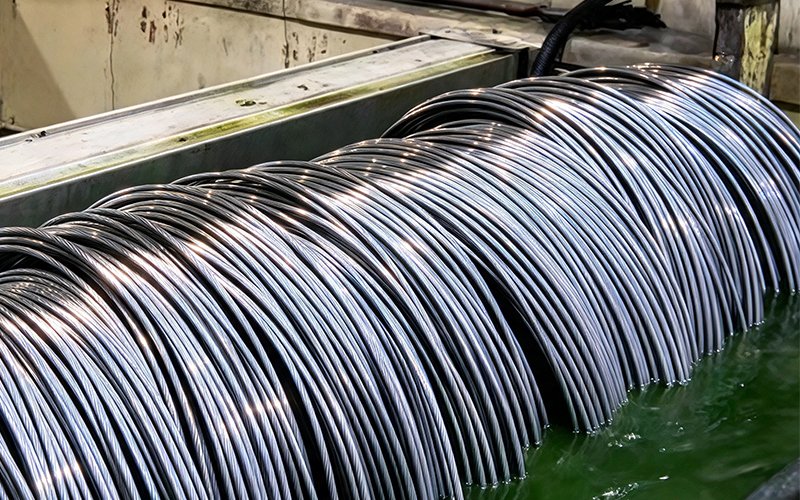
Wire Rod Surface Preparation Before Cold Drawing
Pickling is a critical pretreatment step in cold drawn steel wire production. Its primary purpose is to remove mill scale—mainly iron oxides—from the surface of wire rod before drawing.
If mill scale is not adequately removed, hard oxide particles can damage the wire surface and accelerate drawing die wear. Pickling quality therefore plays an important role in the surface finish, dimensional consistency, and fatigue performance of finished steel wire, particularly high carbon spring steel wire and mattress spring wire.
A properly controlled pickling process removes mill scale while minimizing corrosion of the underlying steel. It also prepares the surface for subsequent phosphating and lubrication, helping the wire achieve stable drawing performance.
1. Why Pickling Matters in Cold Drawing
1.1 Removing Mill Scale
Mill scale is a layer of iron oxides formed during hot rolling and subsequent exposure to elevated temperatures. Because it is harder and more abrasive than the steel substrate, residual scale can scratch the wire during drawing.
Incomplete scale removal may lead to longitudinal scratches, small surface pits, and other defects. These defects can become stress concentration sites and increase the risk of fatigue cracking under repeated loading.
Residual scale can also accelerate die wear, making it more difficult to maintain consistent wire diameter and surface quality.
1.2 Supporting Phosphating and Lubrication
After pickling, wire rod commonly undergoes rinsing and surface conditioning, followed by phosphating and lubrication, depending on the production process.
A clean, properly prepared surface helps the phosphate coating form more uniformly. The coating, together with the drawing lubricant, helps reduce friction between the steel wire and the drawing die.
Effective lubrication supports stable drawing conditions, reduces surface damage, and helps maintain dimensional consistency.
For high carbon spring steel wire, good surface integrity is especially important because surface defects can affect fatigue performance during repeated spring loading.
2. Problems Caused by Improper Pickling
Both insufficient and excessive pickling can compromise wire quality.
2.1 Under-Pickling: Residual Mill Scale
Under-pickling occurs when mill scale is not completely removed. Possible causes include insufficient treatment time, unsuitable acid concentration, inadequate temperature, or inappropriate process conditions.
Residual scale can act as an abrasive during drawing, causing scratches and small surface defects. These defects may increase local stress concentrations and contribute to premature fatigue failure in spring applications.
Remaining scale can also increase die wear and cause greater variation in wire diameter.
Recommended controls:
- Set pickling time, acid concentration, and temperature according to the wire rod condition and process requirements.
- Inspect the wire surface to confirm that mill scale has been adequately removed.
- Monitor bath condition and treatment effectiveness to maintain consistent results.
2.2 Over-Pickling: Steel Substrate Damage
Over-pickling occurs when the acid attacks the steel substrate excessively. It may result from excessive treatment time, unsuitable acid concentration, or inadequate process control.
Excessive acid attack can cause surface roughening, pitting, and localized corrosion. These defects can become crack initiation sites during subsequent drawing or repeated spring loading.
Acid pickling can also introduce hydrogen into steel under certain conditions. If sufficient hydrogen enters susceptible high-strength steel, it may contribute to hydrogen embrittlement and delayed fracture.
The actual risk depends on the steel grade, acid chemistry, treatment conditions, and subsequent processing. Hydrogen-related damage should therefore be assessed through appropriate process controls and, where necessary, material testing.
Recommended controls:
- Avoid excessive pickling time and unsuitable acid concentrations.
- Monitor bath temperature and chemistry within established process limits.
- Inspect the surface for pitting, roughness, and other signs of substrate attack.
- Apply appropriate hydrogen-risk controls for susceptible high-strength steel grades.
2.3 Inadequate Rinsing and Post-Pickling Treatment
If rinsing is insufficient, residual acid or dissolved salts may remain on the wire surface. These residues can promote corrosion during storage and interfere with subsequent phosphating or lubrication.
Surface rust and contamination may prevent uniform coating formation, increase drawing-related surface defects, and reduce the consistency of finished wire quality.
Recommended controls:
- Ensure adequate rinsing after pickling.
- Apply neutralization or other post-pickling treatment where required by the established process.
- Control the time between pickling and subsequent surface treatment.
- Protect treated wire rod from moisture and re-rusting during handling and storage.
3. How Pickling, Phosphating, and Lubrication Work Together
Pickling, phosphating, and lubrication are connected stages in many cold drawing production lines.
Each stage has a different function:
- Pickling: Removes mill scale and prepares the steel surface.
- Phosphating: Forms a conversion coating that supports lubricant retention.
- Lubrication: Reduces friction between the wire and the drawing die during deformation.
The quality of each stage influences the effectiveness of the next. Inadequate pickling can leave scale or damage the steel surface, while poor rinsing can interfere with coating formation. Inconsistent phosphating or lubrication may then contribute to surface scratches, increased die wear, or unstable drawing conditions.
Coordinated control of these stages helps manufacturers achieve more consistent surface quality and drawing performance.
4. Best Practices for Pickling Process Control
To maintain consistent quality in cold drawn steel wire production, manufacturers should focus on the following measures:
- Control process parameters: Maintain suitable acid concentration, temperature, and treatment time according to the material and production requirements.
- Inspect surface condition: Check for residual scale, pitting, roughness, and other visible defects.
- Maintain bath quality: Monitor acid condition, contamination, and process effectiveness.
- Ensure effective rinsing: Prevent residual acid and salts from affecting subsequent treatments.
- Coordinate downstream processes: Maintain consistent phosphating and lubrication conditions.
- Protect treated material: Minimize re-rusting and contamination before drawing.
- Track product quality: Monitor surface finish, wire diameter, die wear, and relevant mechanical properties.
Conclusion
Pickling is an important step in preparing wire rod for cold drawing. Properly controlled pickling removes mill scale while minimizing damage to the steel substrate and creating suitable conditions for subsequent phosphating and lubrication.
Under-pickling can leave abrasive scale, while over-pickling can cause surface corrosion and, under certain conditions, increase hydrogen-related risks. Effective rinsing and coordinated surface-treatment control are therefore essential.
For manufacturers of high carbon spring steel wire and mattress spring wire, consistent pretreatment helps protect surface integrity, support stable drawing operations, and reduce the risk of surface-related quality problems.
WANLIN METAL supplies high carbon spring steel wire and low carbon cold drawn steel wire for industrial applications. Contact our team to discuss your wire specifications and manufacturing requirements.